Hard-Wired Compassion

compassion_2We are born compassionate beings. Babies and toddlers often show unprompted moments of kindness, yet somewhere along the way some of us seem to lose this trait. Road rage is one example. Trophy hunting is another.

The case of Cecil the lion lit up the compassion impulse in so many of us despite the fact that Cecil was just one of thousands of animals that are killed in the name of amusement each year. In BC it is the threatened grizzly bear that is trophy hunted. If each one of our grizzly bears had a name and their individual and unique personality traits were well documented as was the case with Cecil, would we fight harder to bring an end to trophy hunting here in BC?

As well, because we are compassionate we would never subject our pets to inhumane conditions yet we continue to eat meat from factory farmed animals who suffer horrifically. It’s easy to forget their suffering because it is well hidden from us. (“If slaughterhouses had glass walls, everyone would be a vegetarian.Paul McCartney) Cecil became instantly famous because he had a name, but all animals can suffer stress and pain, not just the majestic lion, and not just our cats and dogs. The factory-farmed animal doesn’t know anything but a life of stress and pain.

If we truly want to live our lives with the compassion and caring that is hard-wired in our hearts, we have to take a stand against both trophy hunting and factory farming. If we choose to eat meat, we should know where it comes from, know that the animals were free range and humanely cared for and slaughtered.

The greatness of a nation can be judged by the way its animals are treated.” Mahatma Gandhi

Photo credit:  http://thespiritscience.net/2015/07/05/the-scientific-health-benefits-of-being-compassionate/

Wasting water

bucketMy province is experiencing an unprecedented drought this summer. Living in a rainforest, we’ve always taken our water for granted, but now we’re  being asked to find creative ways to reduce our water consumption. Our gardens have withered because of the watering restrictions, our cars remain dirty , but what else can we do?

I discovered one more way to conserve water in my home – collecting the cold shower water.

My shower has to run for a ridiculously long time before the water gets warm enough for me to step in. With our water restrictions in mind, I decided to collect that cold water. I was shocked that it filled an entire pail which I  now use to water my remaining flowers but it makes me squirm to think of how much perfectly clean water I’ve allowed to run down the drain over the years that I’ve lived in this house.

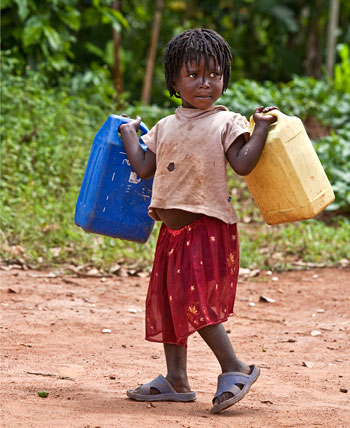
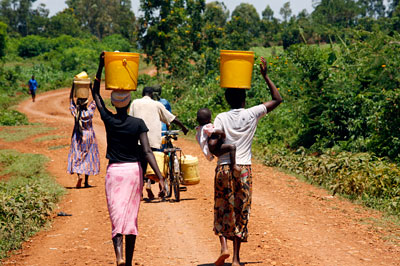
We may groan about having to conserve water this summer, but after seeing first hand the distance people in India and Africa have to walk just to collect water and then carry it home, I am just grateful that water still flows from my taps, and I vow to be more mindful of how I use it.carrying watercarrying water 2

http://inweh.unu.edu/archive/WaterForLife.html (photo credits)

How I’m Honouring Canada Day

canada-day-moose

I won’t be viewing fireworks or waving flags, but I did celebrate Canada Day by making a donation to the David Suzuki Foundation as a tribute to their passion in protecting the Canadian environment.

As well I will:

  • shop locally
  • read a book by a Canadian author
  • hike a local trail
  • and try (this is the hard one for me) to take a greater interest in Canadian politics to determine which party makes environmental concerns a priority.

This week I had the great fortune to explore two new (to me) local trails. On these hikes I saw a deer with her fawn, 2 beaver, a bear, a woodpecker, free range chicken (!), a bald eagle, a brood of baby ducks and numerous other birds. With each of these encounters I knew I was experiencing a ‘Canadian moment’, and marvelled at how all this wildlife can live in such close proximity to the city and still flourish.

The following quote comes from the David Suzuki Foundation, and reflects on personal values and how they can shape the kind of world we live in. I hope you’ll join me in being conscious of where we ‘direct our light.’

“The good news is that values that support a healthy society and sustainable planet — self-respect, concern for others, connection with nature, equality — also make us happiest in the long term. Each one of us is a value prism, subtly bending the light in a particular direction. As Canadians, let’s be conscious of where we direct our light.”

(Written with contributions from David Suzuki Foundation Senior Public Engagement Specialist Aryne Sheppard)

Meatless Monday

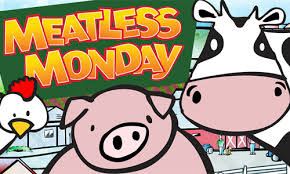
Meatless Monday 2Okay, today is Wednesday, but I just read in the Vancouver Humane Society (VHS) Newsletter that, “If all Canadians went meatless on Mondays, more than 100 million animals would be spared from a miserable life and death in our country’s factory farms.”

Whoa. That’s a lot of animals. I’m guessing this means over a person’s lifetime… but still. That’s just one day a week. What if we had Meatless Monday and Wednesday and Friday? Or everyday?

Pass it On

Thinking Like a Teenager

Gotcha! wpMy books are written for a teenage audience, so when teenagers review them I really pay attention to what they have to say. Did I get the ‘voice’ right? The following quote is from a recent teen review of my novel Gotcha! Phew! It seems I nailed it. I suspect that it was because I was living with three teens while I wrote the book that I was able to think like a teen, and not someone “decades older”, which, of course. I am. Now that my own teens are young adults, I may have to adopt a teen in order to stay current!

“I found the characters in the novel to be quite believable. In the past, I’ve read books aimed towards teenagers, where the characters personalities and actions were inconceivable. In those cases, it was obvious that the authors had not been teenagers for many, many decades. They are written such that it makes it seem as if the author is an outsider looking in. On the other hand, Shelley Hrdlitschka writes with such brilliant pose it’s as if she’s a teenager herself. She understands the highschool dynamic very well. She knows that friendships don’t last forever and that people whom you once had an alliance with, can turn their back on you in a heartbeat, both scenarios reflected in this novel.” Read the entire review here:  http://wajihas.wix.com/chasingdreams#!Gotcha-Thorough-Novel-Review/cmbz/556a56260cf298b2d3f31483

Apathy

(Photo credit: http://mrsgee.deviantart.com/art/Apathy-Bear-139883010)The greatest danger to our future is apathy. (Jane Goodall)

It’s so true, isn’t it?

Environmental concerns are what keep me awake at night, as do images of factory farming (animal factories) and poverty in 3rd world countries.  I fear for the future of my unborn grandchildren. What kind of a planet will they  inherit? What kind of society are we becoming?

And yet, do I speak up? Not often. I make contributions to organizations that are working to make a difference and I try to live in a way that leaves the least damaging footprint, hoping that I’m leading by example. But I know that is not enough. When I see other people’s apathy toward the state of our planet, or to absurd practises (ie. trophy hunting) I tend to keep my thoughts to myself.  I don’t like to make waves, but I guess that’s yet another form of apathy.

(Photo credit: http://mrsgee.deviantart.com/art/Apathy-Bear-139883010)

Thoughts from two more of my heroes.                                                                                                                    Apathy1Apathy2

Purpose

Photo credit: Titania Fernandez This diagram speaks to me – maybe not the ‘you are great at it’ part, (will always be working towards that – which is what makes writing challenging), or the ‘you are paid for it’ part (writers are generally poorly paid and many volunteers have a strong purpose), but all the rest, and especially the way they are interconnected. I think the ‘passion’ component could be slightly larger than the rest. It can come in so many forms, in how you live, how you love, what you believe, how you behave. It’s what I hope my family and friends will all find in their own lives, as it’s what helps us get through the grind of daily living.

(Photo credit: Titania Fernandez)

Father/daughter bonding. Really?

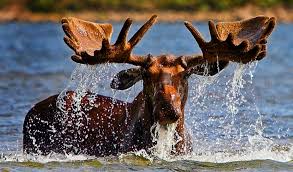
mooseThe trophy hunter being interviewed on the radio defended his ‘hobby’ by claiming that taking his 11-year-old daughter moose-hunting was the most incredible bonding moment he could ever imagine having with her. He spoke with a sense of awe and wonder. It didn’t matter that her first moose was a ‘small’ one, he said, (only 5 points on the antlers), the exhilaration of watching her shoot it, and seeing the thrill she derived from that experience was pure pleasure for him, “a life-altering moment”.

 The interviewer pointed out that it was certainly a life-altering moment for the moose, and suggested that the hunter and his daughter might have derived the same pleasure by simply photographing the moose. The hunter disagreed completely, saying that a photo would get stuffed away in a box somewhere and forgotten, but by hanging the moose-head in their home they would always remember the thrill of that special time together.

 I think he was serious.

 We surround ourselves with like-minded people, so when I heard the sincerity in this guy’s voice I was flabbergasted. Killing a beautiful wild animal for the sake of a trophy would not be a celebrated bonding moment that I would ever consider sharing with my daughters. I always try to understand the point of view of people with ideas that are different than my own, but this one is just too mind-boggling for me.

Photo credit:  http://huntfishmanitoba.ca/go-hunting/what-youll-hunt/moose-1662