Category Archives: Musings

One step forward, two steps back – the fight against single-use plastic

It’s great to see a growing awareness  around single-use plastic and its negative impact on the planet.  Restaurants and coffee shops have stopped automatically putting  plastic straws in drinks. Many shoppers now carry their own reusable shopping bags. These efforts will help reduce the 20 million tons of plastic litter entering the oceans each year.

Unfortunately, just as we’re becoming wise to straws and grocery bags, in large grocery stores it’s now  almost impossible to buy produce (and may other food items, like cookies, or nuts) without the plastic clam shell container. All that plastic that never goes away.  We may throw it in our blue bins, but where does it go from there? Could there possibly be a market for all that plastic? (And do we really need our cucumbers wrapped in plastic?) 

As a consumer I try to limit my purchase of items that are packaged in single-use plastic containers, but it’s a challenge. Farmer’s markets are mostly seasonal, but they’re  a good place to start, as are local produce stores.

Many environmentally responsible restaurants offer take-out food in compostable/paper containers, rather than plastic or styrofoam.  Would these not work for other food items? I understand that they’re not clear, you can’t see what you’re purchasing. But how did we purchase all those food items before the clam shell container? Maybe that’s the ‘two steps back’ that we need to be taking.



Moving beyond the gender binary


Thai washroom sign

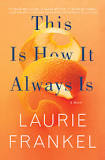
I’ve just finished reading an amazing novel by Laurie Frankel, This Is How It Always Is. It’s a wonderful story on many levels but one small detail really fascinated me. Towards the end of the story two of the characters travel to Thailand and discover people called kathoey. This translates to ladyboy (or what Westerners might call transgender). Kathoey are accepted in Thai culture because their Buddhist beliefs acknowledge that there are more than two sexes. As well, the Thai buddhists believe that there’s no escaping the consequences of the soul coming back in different bodies. Everyone has been kathoey in a previous life and will be again.

Reading about the kathoey reminded me of a similar concept in the traditional Native American culture where people who don’t conform  to the  gender they were assigned at birth are called two-spirit. Since two-spirits exhibit both male and female characteristics, they are believed to have the  ability to see the world through both a male and female perspective. They are considered incredibly wise, and, traditionally, may have become spiritual leaders or healers.

This is the same for the mahu in ancient Hawaii. Mahu is the name of a third-gendered person, that is, not male or female but both or neither. Before white explorers and missionaries  brought homophobic views to Hawaii they were considered special and assumed respected and traditional roles within the communities.

Our Western culture’s traditionally rigid gender binary system – which is fixed between two poles, male or female – is shifting as we become better informed and open-minded, but we can still learn a lot from Thai, Ancient Hawaiian and  Native American traditions.

Eating Molly, the Pet Pig

All hell broke loose this week when it was reported that a young couple had adopted a pet pot-bellied pig from a local SPCA shelter but then killed and ate it.

This couple had signed an agreement that the pig was, indeed, being adopted as a pet – not food – but apparently things didn’t go as planned.  The pig misbehaved but instead of returning it to the animal shelter they decided to have it for dinner instead. They’d only had it for about three weeks. It safe to assume they hadn’t yet bonded.

I understand the outrage. No one can imagine eating a beloved pet. But I wonder how many of those crying ‘foul’ are doing so while eating a ham sandwich, or a BLT?

When we name an animal – in this case ‘Molly’ – and treat it as a pet, does it mean that this pig’s life is more worthy than any other pig? It could be argued that four-year-old Molly led a charmed life compared to the pigs raised for meat on factory farms where the conditions are appalling.  She was at the shelter after being ‘rescued’, but could the circumstances from which she was rescued have been any worse than that of her cousins at the pig farm? The way she was killed was reported as being ‘humane’. I’m not sure that could be said of the slaughter that goes on at factory farms.

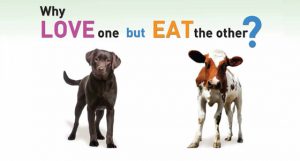
I feel there’s a disconnect in our thinking. That  calf at the petting zoo pulls at our heartstrings with its cuteness, we want to stroke its soft fur, but then we go home and prepare veal for dinner.

It begs the question…


Hygge: my new favourite word

“To give a name to an experience is to pay attention to it,” says Louisa Thomsen Brits in her book, The Book Of Hygge.

And Brits did just that for me. Hygge is a Danish word that describes an experience that I’m familiar with and often strive for, but could never before articulate as I didn’t have a name for it.

The Danes are considered to be among the happiest people on the planet. Perhaps that’s because they have named hygge and put it into practise.

In her book Brits describes hygge (pronounced “hoo-gah) as “a quality of presence and an experience of belonging and togetherness. It’s a feeling of being warm, safe, comforted and sheltered – an experience of belonging to the moment and to each other. Hygge anchors us, reminding us to slow down, to connect with place and with one another, to dwell and savor rather than rush and spend. When you curl up by the fire with a blanket, or have a simple meal with friends, that is hygge, or when you  focus on people rather than things, or when you express love through small gestures, that is hygge.”

Isn’t that perfect? Hygge. My new favourite word for an old favourite experience.


My Love Affair With BC Ferries (or why I hate flying)

I wish I all my travels could be taken aboard a BC Ferry.

Consider air travel vs ferry travel:

  • On a plane you’re strapped into a cramped seat with minimal leg or elbow room.  If you have a window seat and nature calls you have to climb over your travel mates or ask them to get up. This ‘call’ usually arrives just as they’ve fallen asleep.  On the ferry, however,  window seats aren’t boxed in and you can opt to sit alone if you’re not feeling friendly. The seats are spacious, cushy, you don’t need to strap yourself in and there’s no problem accessing aisles. You can walk around the ferry for the entire trip if you don’t feel like sitting. You can even shop aboard the larger vessels.
  • Washrooms on airplanes are scary, noisy, cramped spaces and there are very few. If one becomes “unusable” for any reason, the line-ups for the remaining few become long. Washrooms on ferries are numerous, spacious and, in my experience, clean.
  • Unless you’re flying business class, food on flights is limited and expensive and your first choice is usually unavailable once the flight attendant reaches your row. (Same with the beer and wine.)  On BC Ferries there are a lot more options as well as tables for dining.
  • The scenery from the window of a BC ferry is spectacular and ever-changing as compared to the view of  endless sky and clouds when you’re in the air. (And you see nothing if your seat mate has closed the window screen.)
  • Boarding a ferry does not require frustrating security checks and you don’t have to pay extra for your bags.
  • Turbulence is more unsettling than rough seas – there’s further to fall.

Part of my love affair with ferry travel is that feeling of suspended time. There’s nothing you have to do but read, nap, nibble or eavesdrop while seated in a comfortable lounge. Much the same may be said of air travel but with the comfort factor removed and if you forget to bring nibblies you’re out of luck.

I never grow tired of watching ferries come around the point and glide into the bay, majestic giants, quiet and snow-white against a backdrop of blue ocean and moss green mountains.

It’s a shame that air travel is far faster and you can visit significantly more places than with ferry travel.

Perhaps the greatest reason I love ferry travel is that it always coincides with the start of  beloved cabin time, or time spent with a dear friend. Perhaps that’s the real reason I look forward to riding BC Ferries.

Reaching out…

making a difference 1 Last week I received a Facebook message from a woman who asked if I’d taught at a particular school close to 30 years ago. I had. She said she’d been a student in my class when she was in Grade 3. She’d recently read a post on Social Media about favourite teachers and it made her think of me.

This woman, who is now 41, went on to tell me that she remembers that I was always ‘happy and fun’. She shared a few of the funny things she recalls from my class (like how to use the tune from the Mickey Mouse song to spell my name) (I still use that song to teach people how to spell it) and how she began to come out of her shell that year. She finished by thanking me for being an ‘amazing teacher.’

I was so grateful to hear from this woman. I would have been in my early 20’s then and was definitely wet behind the ears when it came to teaching. I felt like an imposter, not a ‘real’ teacher. Apparently I did okay.  🙂 Hearing from her has reminded me of how important it is to reach out to those who have made a difference in our lives and to thank  them. Let’s do it before it’s too late.

Be an encourager. Scatter sunshine. Who knows whose life you might touch with something as simple as a kind word. Debbie Macomber


making a difference 2

A Writerly Crisis of Faith

Apathy_Bear_by_MrsGeeI’m writing a new novel. This one is for an adult audience, not my usual genre which is young adult. This is new territory for me. I spent months doing the research, and now I’m well into the story.  I’ll probably spend another year completing it before I’ll shop it around to publishers. If it’s any good and with a little luck it will get published and then I’ll start another one. Such is the life of a novelist.

But there’s always that chance that I won’t find a publisher for this one. It’s an extremely competitive field. I might have missed the boat with the topic which may be passé by the time the story is complete. Am I wasting a couple years of my life working on something that will simply grow mouldy in a file cabinet drawer in my basement? Every day I wonder if my time would be better spent working in a soup kitchen, bringing meals to the elderly, volunteering in a hospital – all things that would help make my community a better place.

This is the dilemma faced by most writers. Hugely successful ones sign contracts before a project is written, but for most of us, writing is an act of faith. We enjoy the process, but we also hope that our words  will  find an audience to entertain, inform, or simply be thought-provoking. But there are days, like this one, when the words aren’t flowing and the passage of time stares me in the face and I wonder … is this the best use of the time?

To Sir, with love

winnie07

Sir Winston

He’s deaf, mostly blind and, (I hate to say it) he smells bad. Goopy-eyed and senile, he often barks incessantly for no apparent reason. He’s developed disgusting habits, like sniffing out cat poop for consumption, and he’s prone to accidents in the house. Tangle-ups with his retractable leash have caused three broken bones (mine, not his.) He’s the kind of aging dog that only those of us who have lived with him for sixteen years could love, but love him we do. This is our treasured Sir Winston.

Continue reading

Thank you, Mom

Library

This week I spent a morning sitting in a comfy lounge chair at my local library. Occasionally I would look up from the book I was reading and watch the steady stream of people going in and out through the front doors. It was a weekday morning, so it was mostly seniors and toddlers with their caregivers. Librarians were helping patrons, and there was a quiet but friendly buzz in the building. I said a quiet ‘thank you’ to my mom who turned me into a library user all those years ago. Is there a better institution in our communities? I don’t think so. All those books, free! Continue reading

A Catch 22 – Selling the rhino horn to save the rhino

rhino 2

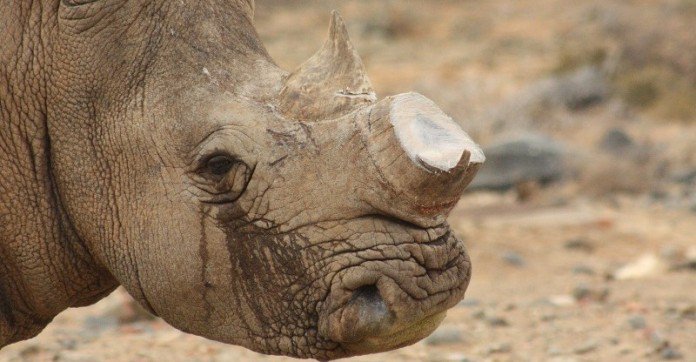
Okay, who doesn’t want a cure for cancer and/or hangovers? I sympathize, but I won’t be looking to the horn of the rhino for relief anytime soon.

As we’ve heard in the news, rhino horns are a coveted commodity in Asia, thought to do everything from curing life-threatening disease to relieving simple ailments. As a result, the animals are being illegally poached and killed for their horns. Their numbers have dwindled alarmingly. The situation is dire.

Enter, stage left: South African, John Hume owns and operates the world’s largest captive breeding operation of rhinos.  He claims that his life ambition is to save the rhinos from extinction. His farm houses 4% of the global population. He, too, saws off the rhinos’ horns, (without killing the animal) in order to make them less attractive to the poachers (who do kill them). The thing is, the horn grows back and can be harvested every 18 months.

The twist: Hume sells the horns to the Asian market, arguing that the profit he makes goes directly back into sustaining his farm that protects the rhino.

Talk about a paradox. Hume is keeping the demand for rhino horns alive, the exact same reason he has to run a rhino refuge in the first place.

If there was scientific evidence showing that yes, indeed, the rhino horn does have medicinal value, this practise of Hume’s may have some merit, but until then… it seems education is still the way to go, the dispelling of incorrect beliefs about the properties of the rhino horn.

(And yes, easy for me to sit here in Canada and condemn a practise happening in South Africa when our own threatened species, the grizzly bear, is still being trophy hunted. Just as horrific, I know, I know.)