Coming soon…

New book!  New genre!


Young Grinder

Young Coola

It’s always so exciting to sign a book contract. This one is something entirely different for me –  a non-fiction, illustated children’s book celebrating the lives of the two bears, Coola and Grinder,  who live at the Wildlife Refuge on Grouse Mountain. It describes how they came to live on the mountain as small cubs, why they can never be released and what we have learned about grizzly bears from studying their behaviour. I wrote it with Rae Schidlo and it will be illustrated by Linda Sharp.  It is coming out in the spring of 2019, right about the time the two bears come out of hibernation. How is that for good timing?

Coola and Grinder coming out of hibernation together.


Rae and I wrote this book because we both volunteered at the Wildlife Refuge and developed a passion for these bears. They are magnificent creatures, their story is fascinating, and we felt it should be shared. Proceeds from book sales will be turned over to the Grouse Mountain Wildlife Refuge.

I can’t wait to see the finished book!

Thank you Heritage House for agreeing to publish this story.


Photo credit of adult bears: Devin Manky

Do One Thing Every Day That Scares You

I thought of this famous quote when I was a passenger in a car in India, our driver weaving through the mad jumble of rickshaws, pedicabs, cows, motorbikes (with entire families clinging to them), tuk tuks, herds of goats, bicycles, pedestrians and other vehicles. Our North American rules-of-the-road were not adhered to there. I was amazed that it all seemed to flow anyway, even though it looked and felt so chaotic. Each day I thought might be my last, especially  on the highways where truck drivers seemed to take such risks when passing other vehicles. I had to cover my eyes many times as  freight trucks barrelled down on us, switching to the other lane at the last second…

I’m thinking of this quote  again as I prepare for a cycling trip that will take us across Prince Edward Island. This will be a full week of doing something every day that scares me.  I signed on to the trip as I thought this would be a great way to see a part of Canada I’ve never visited. Apparently the route is mostly gravel pathways, and relatively flat. Trouble is, although I ride bikes occasionally, I am not a cyclist, and 60 kilometre days may be a stretch for me. I’m not a spring chicken. It seemed like such a good idea eight months ago.

I’m beginning to prepare  in earnest now, with less than a month before the trip begins. Doubts and fears are creeping in. Will I be the lone cyclist at the back of the pack each day? Will I need to find other transportation to get me to each day’s destination? Will the bicycle seat be comfy???

If it doesn’t challenge you, it doesn’t change you.

And we want to continuing growing, don’t we?

I think I’m up for the challenge, comfy bike seat or not.


A Sunset Industry?

I read 3 opinions this week (re the controvercial oil pipelines in BC) that really spoke to me.


1. “It is difficult to get a man to understand something when his salary depends on his not understanding it.” (Upton Sinclair)

2. “Buying this pipeline is like buying a horse and buggy company at the advent of the car.” (Andrew Weaver)

3. “Why is our government subsidizing a sunset industry rather than doubling down on cleaner renewables. Renewable energy and clean technology create more jobs per dollar than pipelines.” (David Suzuki Foundation)

I guess it’s easy to see which side of the fence I sit on, though I know the issue is huge and complicated.


We Shape The World

We shape the world –
By what we consume.
By what we give.
By the questions we ask.
By what we stand for.
By what we won’t.

We shape the world –
By taking the time to make
Thoughtful decisions.
Supporting artists and makers
Because we want a world
That supports artists and makers.

We shape the world –
By consuming less.
By buying it only if we love it.
And using it for years to come.
By mending it when it’s broken, and
Someday passing it along to become
Someone else’s beloved treasure.

(As seen on a storefront in Deep Cove, BC)

One step forward, two steps back – the fight against single-use plastic

It’s great to see a growing awareness  around single-use plastic and its negative impact on the planet.  Restaurants and coffee shops have stopped automatically putting  plastic straws in drinks. Many shoppers now carry their own reusable shopping bags. These efforts will help reduce the 20 million tons of plastic litter entering the oceans each year.

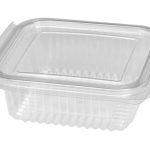
Unfortunately, just as we’re becoming wise to straws and grocery bags, in large grocery stores it’s now  almost impossible to buy produce (and may other food items, like cookies, or nuts) without the plastic clam shell container. All that plastic that never goes away.  We may throw it in our blue bins, but where does it go from there? Could there possibly be a market for all that plastic? (And do we really need our cucumbers wrapped in plastic?) 

As a consumer I try to limit my purchase of items that are packaged in single-use plastic containers, but it’s a challenge. Farmer’s markets are mostly seasonal, but they’re  a good place to start, as are local produce stores.

Many environmentally responsible restaurants offer take-out food in compostable/paper containers, rather than plastic or styrofoam.  Would these not work for other food items? I understand that they’re not clear, you can’t see what you’re purchasing. But how did we purchase all those food items before the clam shell container? Maybe that’s the ‘two steps back’ that we need to be taking.


Moving beyond the gender binary


Thai washroom sign

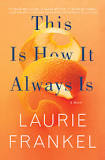
I’ve just finished reading an amazing novel by Laurie Frankel, This Is How It Always Is. It’s a wonderful story on many levels but one small detail really fascinated me. Towards the end of the story two of the characters travel to Thailand and discover people called kathoey. This translates to ladyboy (or what Westerners might call transgender). Kathoey are accepted in Thai culture because their Buddhist beliefs acknowledge that there are more than two sexes. As well, the Thai buddhists believe that there’s no escaping the consequences of the soul coming back in different bodies. Everyone has been kathoey in a previous life and will be again.

Reading about the kathoey reminded me of a similar concept in the traditional Native American culture where people who don’t conform  to the  gender they were assigned at birth are called two-spirit. Since two-spirits exhibit both male and female characteristics, they are believed to have the  ability to see the world through both a male and female perspective. They are considered incredibly wise, and, traditionally, may have become spiritual leaders or healers.

This is the same for the mahu in ancient Hawaii. Mahu is the name of a third-gendered person, that is, not male or female but both or neither. Before white explorers and missionaries  brought homophobic views to Hawaii they were considered special and assumed respected and traditional roles within the communities.

Our Western culture’s traditionally rigid gender binary system – which is fixed between two poles, male or female – is shifting as we become better informed and open-minded, but we can still learn a lot from Thai, Ancient Hawaiian and  Native American traditions.

Judging a Book By Its Cover

Isn’t this book cover stunning?  I like to think that I’m not one to ‘choose a book by its cover’, but  that’s exactly why I chose this one, that and the fact that it’s Y/A and written by a Canadian author.

I also think the title is wonderfully enticing.

A lot of readers believe that the author has some say in the cover art. In my experience, it’s the publisher who makes all those decisions. An author gives their story a title, but again, the publisher may choose a different one. The author’s job is to write the story, but marketing it may not be their strength. It takes a different set of skills to design a book cover that has visual appeal.

For me, bookstores and libraries are like art galleries. So much thought has been put into the cover art and design of  each book. The art needs to hint at the flavour of the story as well as be eye-catching. I could spend hours browsing the shelves, admiring the covers and guessing at the inside stories. In the end, I usually choose a book that has been recommended to me or is by an author I’ve enjoyed in the past, but it doesn’t keep me from savouring all the other covers.

Styles of cover art go in and out of vogue. Publishers have to keep current fashion trends in mind when designing a cover. Many books use photo-art, as in Exit, Pursued By A Bear, (Dutton Books, 2016) but others have been created by graphic artists or illustrators, like my soon-to-be published book, Lost Boy.  (Marie Bergeron, artist) (Orca, Fall, 2018)Lost Boy

Does cover art influence your reading choices?


Eating Molly, the Pet Pig

All hell broke loose this week when it was reported that a young couple had adopted a pet pot-bellied pig from a local SPCA shelter but then killed and ate it.
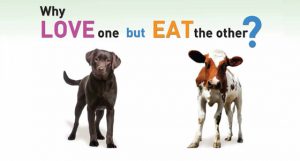

This couple had signed an agreement that the pig was, indeed, being adopted as a pet – not food – but apparently things didn’t go as planned.  The pig misbehaved but instead of returning it to the animal shelter they decided to have it for dinner instead. They’d only had it for about three weeks. It safe to assume they hadn’t yet bonded.

I understand the outrage. No one can imagine eating a beloved pet. But I wonder how many of those crying ‘foul’ are doing so while eating a ham sandwich, or a BLT?

When we name an animal – in this case ‘Molly’ – and treat it as a pet, does it mean that this pig’s life is more worthy than any other pig? It could be argued that four-year-old Molly led a charmed life compared to the pigs raised for meat on factory farms where the conditions are appalling.  She was at the shelter after being ‘rescued’, but could the circumstances from which she was rescued have been any worse than that of her cousins at the pig farm? The way she was killed was reported as being ‘humane’. I’m not sure that could be said of the slaughter that goes on at factory farms.

I feel there’s a disconnect in our thinking. That  calf at the petting zoo pulls at our heartstrings with its cuteness, we want to stroke its soft fur, but then we go home and prepare veal for dinner.

It begs the question…


Hygge: my new favourite word

“To give a name to an experience is to pay attention to it,” says Louisa Thomsen Brits in her book, The Book Of Hygge.

And Brits did just that for me. Hygge is a Danish word that describes an experience that I’m familiar with and often strive for, but could never before articulate as I didn’t have a name for it.

The Danes are considered to be among the happiest people on the planet. Perhaps that’s because they have named hygge and put it into practise.

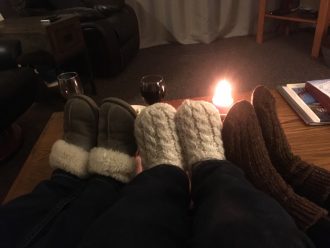
In her book Brits describes hygge (pronounced “hoo-gah) as “a quality of presence and an experience of belonging and togetherness. It’s a feeling of being warm, safe, comforted and sheltered – an experience of belonging to the moment and to each other. Hygge anchors us, reminding us to slow down, to connect with place and with one another, to dwell and savor rather than rush and spend. When you curl up by the fire with a blanket, or have a simple meal with friends, that is hygge, or when you  focus on people rather than things, or when you express love through small gestures, that is hygge.”

Isn’t that perfect? Hygge. My new favourite word for an old favourite experience.