I wish I all my travels could be taken aboard a BC Ferry.
Consider air travel vs ferry travel:
- On a plane you’re strapped into a cramped seat with minimal leg or elbow room. If you have a window seat and nature calls you have to climb over your travel mates or ask them to get up. This ‘call’ usually arrives just as they’ve fallen asleep. On the ferry, however, window seats aren’t boxed in and you can opt to sit alone if you’re not feeling friendly. The seats are spacious, cushy, you don’t need to strap yourself in and there’s no problem accessing aisles. You can walk around the ferry for the entire trip if you don’t feel like sitting. You can even shop aboard the larger vessels.
- Washrooms on airplanes are scary, noisy, cramped spaces and there are very few. If one becomes “unusable” for any reason, the line-ups for the remaining few become long. Washrooms on ferries are numerous, spacious and, in my experience, clean.
- Unless you’re flying business class, food on flights is limited and expensive and your first choice is usually unavailable once the flight attendant reaches your row. (Same with the beer and wine.) On BC Ferries there are a lot more options as well as tables for dining.
- The scenery from the window of a BC ferry is spectacular and ever-changing as compared to the view of endless sky and clouds when you’re in the air. (And you see nothing if your seat mate has closed the window screen.)
- Boarding a ferry does not require frustrating security checks and you don’t have to pay extra for your bags.
- Turbulence is more unsettling than rough seas – there’s further to fall.
Part of my love affair with ferry travel is that feeling of suspended time. There’s nothing you have to do but read, nap, nibble or eavesdrop while seated in a comfortable lounge. Much the same may be said of air travel but with the comfort factor removed and if you forget to bring nibblies you’re out of luck.
I never grow tired of watching ferries come around the point and glide into the bay, majestic giants, quiet and snow-white against a backdrop of blue ocean and moss green mountains.
It’s a shame that air travel is far faster and you can visit significantly more places than with ferry travel.
Perhaps the greatest reason I love ferry travel is that it always coincides with the start of beloved cabin time, or time spent with a dear friend. Perhaps that’s the real reason I look forward to riding BC Ferries.

 The rainforest in Sumatra and Borneo is being cleared at an alarming rate to make way for palm oil production. This deforestation has caused critical habitat degradation for the orangutan who could become extinct in 5-10 years if the palm oil industry continues at its current pace.
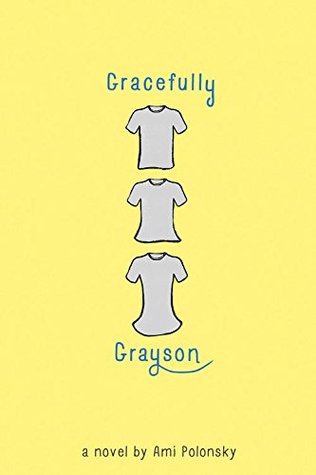
 Last week I received a Facebook message from a woman who asked if I’d taught at a particular school close to 30 years ago. I had. She said she’d been a student in my class when she was in Grade 3. She’d recently read a post on Social Media about favourite teachers and it made her think of me.
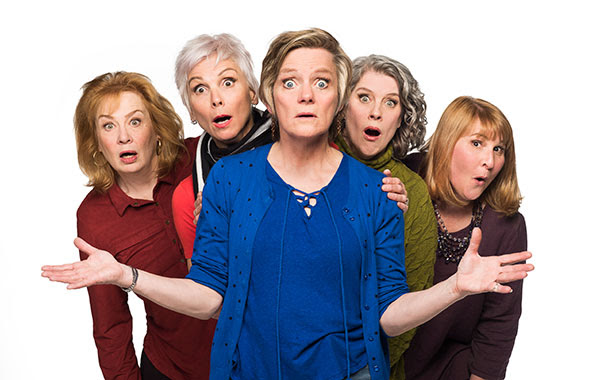 I’m so excited that I soon get to see these women perform in their new theatre production, Mom’s the Word 3: Nest 1/2 Empty. I’ve been following their careers since they staged the first version of Mom’s the Word, a collection of stories that poke fun at the joys and challenges of raising toddlers. Their second show in this series – some years later – dealt with raising teens and it was just as wonderful. Now they’re on their third production where their children are leaving the nest (or not). Their marriages may have evolved as well. Alison Kelly (second from right) and I swapped parenting stories on the side of the soccer pitch for many years so I know first hand where some of her material comes from.
  I’m writing a new novel. This one is for an adult audience, not my usual genre which is young adult. This is new territory for me. I spent months doing the research, and now I’m well into the story. I’ll probably spend another year completing it before I’ll shop it around to publishers. If it’s any good and with a little luck it will get published and then I’ll start another one. Such is the life of a novelist.
 In my book, Dancing in the Rain, the character of Brenna entertains the tourists on Grouse Mountain by hand feeding the whisky jacks, a bird commonly found on the mountain. I liked the idea, but had never actually done it myself. Yesterday I spotted a group of them in in the trees while snowshoeing on Mount Seymour . I put out my hand to see what would happen. Immediately a bird landed on it, looking for food. Because she was so friendly I shared my Cliff bar with her. Nothing makes me happier than being up close to wildlife.
 I’ve signed a book contract for book #11! The working title is Lost Boy and I believe it is due out in 2018. Thank you Orca Book Publishers!